
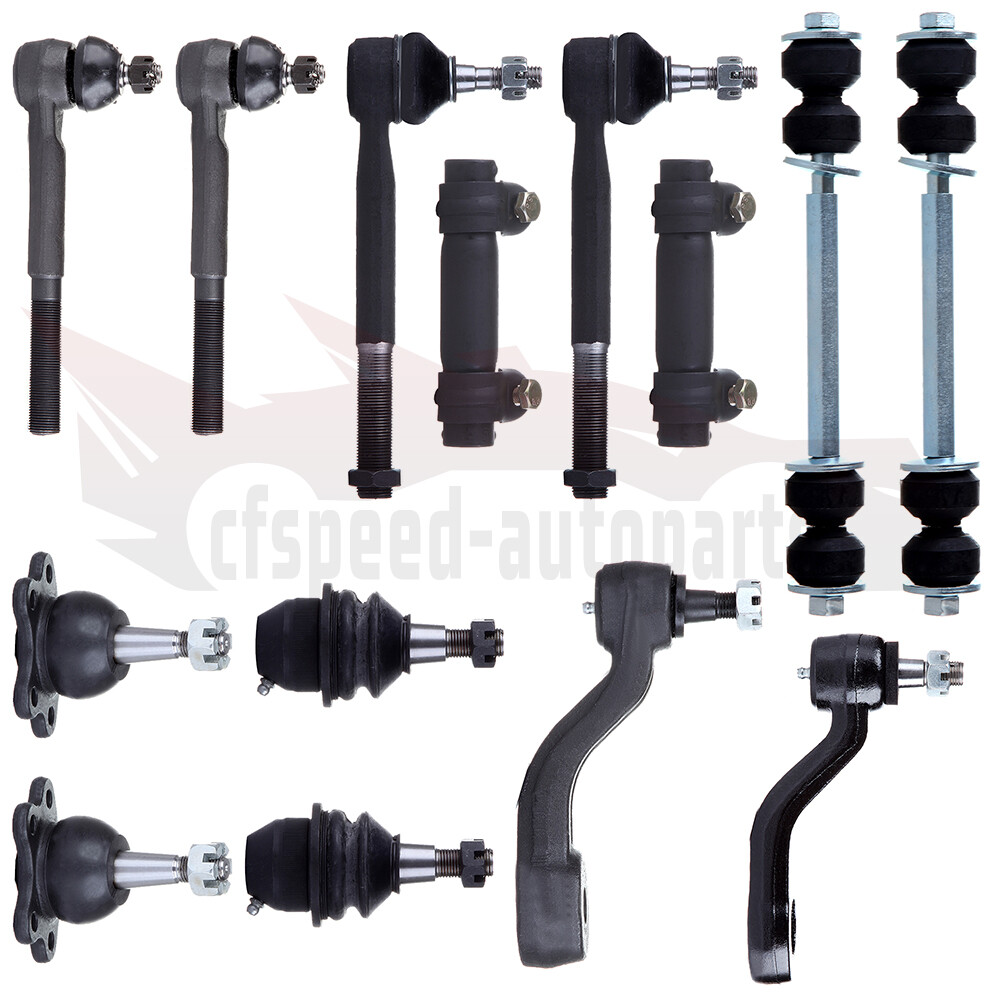

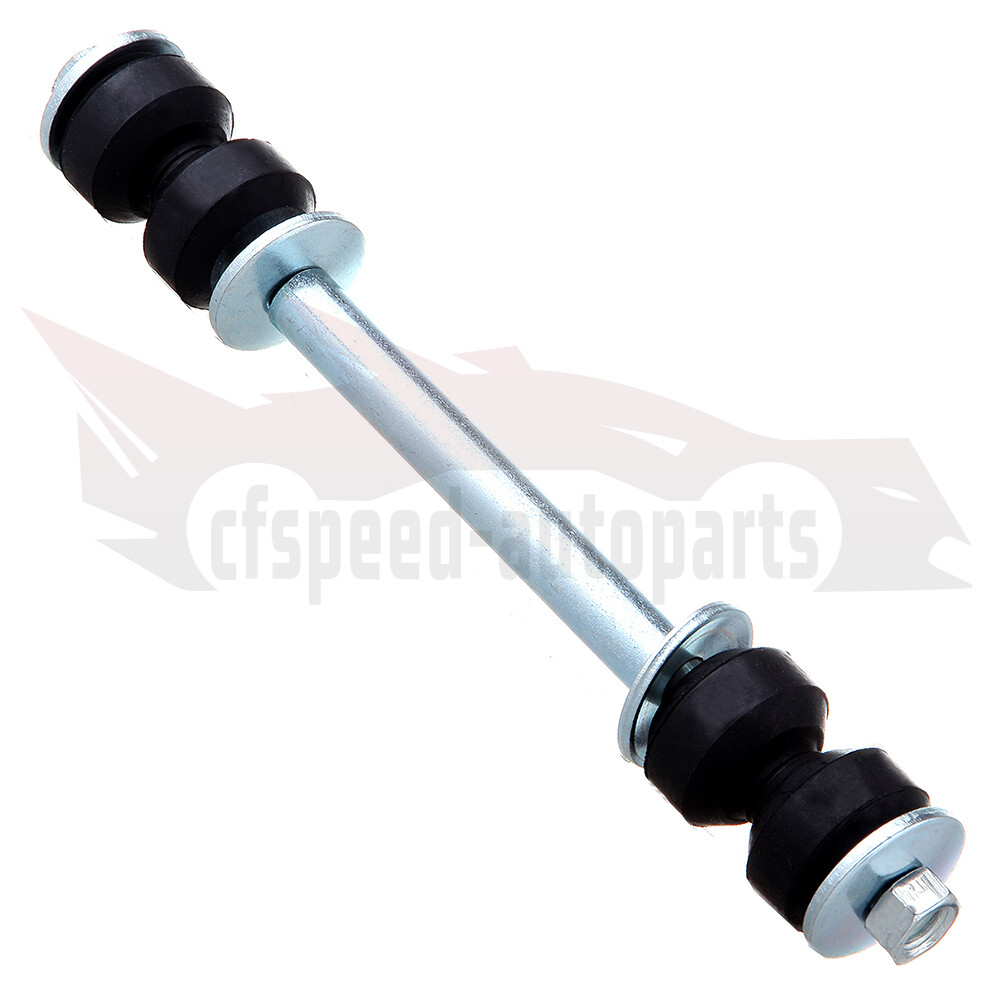


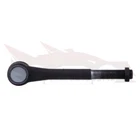

14pc Front Sway Bar Tie Rod Ball Joint Kit for Chevy GMC 4x4 4WD Trucks
$ 45.57
Description
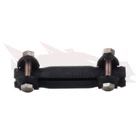
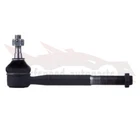
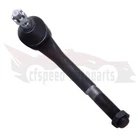
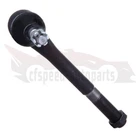
1.Fitting the Following Vehicle: 14pcs Front Sway Bar Tie Rod Ball Joint Kit for Chevrolet & GMC Trucks 4x4 / 4WD 1.Fitting the Following Vehicle: CHEVROLET/GMC K1500 1995 - 1999 Fits 4x4 Models w/ Press-in Ball Joint - Independent Front Suspension CHEVROLET/GMC K1500 SUBURBAN 1995 - 1999 Fits 4x4 Models w/ Press-in Ball Joint - Independent Front Suspension CHEVROLET/GMC K2500 1995 - 2000 Fits 4x4 w/ 7200lb GVW Models w/ Press-in Ball Joint - Independent Front Suspension CHEVROLET TAHOE 1995 - 2000 Fits 4x4 w/ Z71 Package w/ Press-in Ball Joint - Independent Front Suspension CHEVROLET YUKON 1995 - 2000 Fits 4x4 w/ Z71 Package w/ Press-in Ball Joint - Independent Front Suspension 2.Package Includes: 2x Front Lower Ball Joints - K6509 2x Front Upper Ball Joint - K6292 2x Front Stabilizer Bar Link - K80631 2x Outer Tie Rod End Link - ES2836RL 2x Inner Tie Rod End Link - ES2838RL 2x Adjustment Sleeve - ES2004S 1x Pitman Arm - K6335 1x Idler Arm - K 6447 3.Note Although some parts have grease fittings, other parts are factory sealed, but do not affect the fit and quality of the parts. 10 Year Warranty Please check above compatibility list to make sure it fits your vehicle. If you want to find more about suspension kits,clicking our store . Suspension Control Arm Replacement Guideline: Control arms are installed in pairs on the front and rear axle and connect the chassis to the wheels as part of the suspension. Therefore, they have a significant influence on the driving characteristics of the vehicle. A dynamic or a comfortable driving style? The control arms are individually adjusted to the vehicle depending on the desired characteristics. They also absorb lateral movements and forces resulting from driving off and braking. Picture(A) A defective control arm can manifest in the following ways: (1).Noise (squeaking, creaking, rumbling). (2).Deteriorating driveability. (3).Increasingly woolly and imprecise steering. (4).Uneven tyre wear. Tip:If the control arm is in working order, it is possible to only replace the defective bearings and joints. However, replacing bearings, control arm bushings and ball joints can be very complex and costly. Picture(B) 1.First lift the vehicle using a car lift, ideally a wheel-free four-post car lift. This makes it easier to correctly tighten the control arm fixing screws. WARNING:Depending on the axle design, the control arm may need to be secured against falling with a suitable device, e.g. a transmission lifter. 2.Treat the fixing screws and nuts of the control arm with rust solvent and leave it to work for a few minutes so that they are easier to loosen. 3.On vehicles with automatic headlight levelling, it may be necessary to detach the leveling sensor from the control arm. Picture(C) 4.If the stabilizer is connected to the control arm, the next step is to loosen and remove the corresponding stabiliser fixing screws. 5.Loosen and remove the control arm fixing screws. 6.Loosen the ball joint at the steering knuckle with a suitable special tool (e.g. a puller). 7.Remove the old control arm. Picture(D) 8.Clean the mounting flange of the ball joint pin on the steering knuckle with sandpaper and then with brake cleaner. Otherwise single rust particles can enter the new control arm joint via the ball pin, potentially leading to premature failure of the joint. Picture(E) 9.Fit the new control arm with the supplied accessories and attach new fixing screws and nuts. Picture(F) 10.Reattach the stabilizer and, if applicable, the leveling sensor for headlight leveling to the control arm. NOTE:Do not tighten the fixing screws and nuts in this step, otherwise the rubber mounts will twist when the suspension compresses. This would lead to undesired preloading onf the mounts. Picture(G) 11.Now lower the vehicle until the suspension is compressed. Depending on vehicle type, load or unload the vehicle until the required height published in the specific installation instruction is reached. This is where a wheel-free four-post car lift is advantageous, as the underside of the vehicle can still be easily accessed once lowered. 12.Tighten the fixing screws with the torque stipulated by the vehicle manufacturer. 13.Lower the vehicle all the way. 14.Measure the chassis and adjust if necessary. 15.Check and, if necessary, adjust the headlight settings on vehicles with automatic headlight leveling where the leveling sensor is attached to the control arm. 16.To conclude, test-drive the vehicle. Ball Joint Replacement Guideline: If there is a knocking or clunking noise in the area of the front axle when the car is traveling over road bumps, potholes or curbs, then there is usually a defect in a component of the wheel suspension. Picture(A) The side of the front axle from which the (vibration) noise is emanating can already be determined during a test drive. The type of noise also already provides certain indications for maintenance regarding which components might be faulty. Picture(B) 1.Raise the vehicle and remove the front wheels. 2.To loosen the fastening screws and fixing nuts of the compression ball joint more easily, spray them with rust remover and allow to act for a few minutes. Picture(C) 3.Loosen the fastening screws of the broken ball joint on the control arm and remove the nuts. Picture(D) 4.Loosen and remove the fixing nut of the ball joint on the steering knuckle. Tip:If the ball stud rotates, hold the ball stud in place with a hexagon socket. Picture(E) 5.Remove the bad or worn ball joint from the control arm. 6.Loosen the compression ball joint on the steering knuckle using a suitable special tool. Picture(F) 7.Clean the cone connection. Tip:For better sealing and durability of the ball joint sleeve, a little silicone grease can be applied to the contact surface. Picture(G) 8.Insert new compression ball joint in the control arm and steering knuckle and tighten with new fixing nuts. 9.Reinstall front wheels. Lower the vehicle and tighten the wheel studs to the tightening torque specified by the vehicle manufacturer. 10.Measure the chassis and adjust it using the various holes on the compression ball joint if necessary. 11.Finally, carry out a test drive. Sway Bar Stabilizer Link Replacement Guideline: While driving, the following signs may indicate a faulty sway bar stabilizer link: (1).Rattling and thumping noises on rough roads. (2).Imprecise vehicle handling. (3).Stronger inclination of the vehicle during cornering. If the sway bar stabilizer link is found to be defective, it should be replaced as described below. Picture(A) 1.Raise vehicle and remove front wheels. Tip:Always check both stabilizer links and replace them in pairs if necessary. 2.Spray fastening nuts of the stabilizer link with rust remover and let act for a few minutes. Picture(B) 3.Loosen the lower fastening nut of the stabilizer link at the stabilizer and remove. Tip:If the ball stud also starts to turn, hold it with a suitable tool. 4.Press stabilizer link out of torsion bar. Picture(C) 5.Loosen the upper fastening nut of the stabilizer link at the suspension strut and remove it. Tip:If the ball stud also starts to turn, hold it with a suitable tool. Picture(D) 6.Press stabilizer link at suspension strut out of bracket. Picture(E) 7.Insert new stabilizer link at suspension strut. Picture(F) 8.Tighten stabilizer link at suspension strut to the tightening torque specified by the vehicle manufacturer. Tip:Secure the ball stud against twisting with a suitable tool. Picture(G) 9.Insert new stabilizer link at stabilizer. 10.Tighten stabilizer link at stabilizer to the tightening torque specified by the vehicle manufacturer. Tip:Secure the ball stud against twisting with a suitable tool. Picture(H) 11.Remount the front wheels. Lower the vehicle and tighten the wheel studs to the tightening torque specified by the vehicle manufacturer. Tip:Even if replacing the stabilizer link does not directly affect the chassis setting, we recommend checking the axle setting and adjusting if necessary after working on the suspension. 12.Conclude with a test drive. Tie-Rod End Replacement Guideline: If you feel a bump in the steering when driving over road bumps or curbs, this might be due to worn tie rod ends or inner tie rods. Clicking noises during sudden steering movements can also be symptoms of a defective tie rod. In order to determine the exact cause and replace the defective tie rod, the car must be elevated with a vehicle lift in order to be examined more closely. This useful tip applies to the exchange of tie rod ends and inner tie rods, which together form the so-called tie rod. Picture(A) Note: Cleanliness is extremely important when working on the power steering. Incorrect work and contamination can lead to leakage and, in the worst case, to failure of the steering assistance. 1.Lift the vehicle and dismount the front axle wheels. 2.Spray the fastening nut of the tie rod end with rust remover and leave it on for a few minutes. Picture(B) 3.Dismount the front underride guard. Picture(C) 4.Loosen the fastening nut from the tie rod and remove it completely. 5.Remove the tie rod end from the steeringknuckle using an appropriate ball joint separator. Picture(D) 6.Remove the clamp of the bellow on the steering gear. 7.Push the bellow towards the tie rod end. Picture(E) 8.Unscrew the inner tie rod from the rack. 9.Clean the sealing face of the bellow at the steering gear. Picture(F) 10.Clean the lug of the rubber contact surface of the ball joint in the steering knuckle. Note:Always use new self-locking nuts and bolts for a reliable repair. 11.Screw the new inner tie rod into the rack and tighten it with the tightening torque that has been specified by the vehicle manufacturer. Picture(G) 12.Mount the bellow and close the clamps with the appropriate special tool. Note:Incorrect mounting of the bellow can lead to corrosion of the rack: the steering gear starts leaking which can lead to a failure in the steering assistance. Picture(H) 13.Secure the ball joint in the steering knuckle and mount the nut. Please observe the tightening torque suggested by the vehicle manufacturer. Note:During mounting, the ball stud should not turn within the ball joint. This can cause damage inside the ball joint and can lead to early failure. Tip:Secure the ball stud against twisting with a suitable tool. Picture(I) 14.Mount the front underride guard. 15.Mount the front wheels and tighten them with the tightening torque recommended by the vehicle manufacturer. 16.Align the wheels and adjust them if necessary. Observe the vehicle manufacturer specifications. 17.Perform a test drive. Note:When performing the test drive, pay special attention to the handling while cornering and listen for possible noise emission. Item Specifics Placement on Vehicle Left Right Front Upper Lower Type Sway Bar Link Universal Fitment No Custom Bundle Yes Interchange Part Number K80631 ES2004S ES2836RL K6292 ES2838RL K6447 K6335 K6509 OE/OEM Part Number Suspension Steering Tie Rod Ends Linkages Assembly,Ball Joints Bundle Description Sway Bar,Tie Rod (Adjusting Sleeve),Ball Joint,Pitman/Idler Arm Superseded Part Number Front Driver and Passenger Side Replacement Manufacturer Warranty 10 Year Brand cfspeed-autoparts UPC Does Not Apply Manufacturer Part Number TA82831806P Adjustable Yes Greasable or Sealed Greasable Kit Included 14 Pieces Surface Finish Premium Quality Features Greasable Finish Coated Material Alloy Steel Mounting Style Bolt-On Cotter Pin Hole Yes Features Greasable Finish Coated Material Alloy Steel Mounting Style Bolt-On Cotter Pin Hole Yes Payment Payments are expected within 7 days after the last winning auction is closed; Otherwise Unpaid Item Dispute will be filed with eBay. Shipping Product will be shipped within 2 business days after full payment is received and verified. Delivery Time is about 3-7 business days to most of countries. All domestic orders will be shipped via USPS, UPS or FedEx from our US warehouse and usually arrives to your door in about 3-5 business days. We ship the package to your shipping address in eBay instead of the one in PayPal. Please tell us your shipping address if it is different from the one in eBay. The tracking number will be given for the customer to check the shipping status online (registered or faster service only). We are not responsible for any wrong or undeliverable addresses. Please verify and update your shipping address on eBay during checkout. Returns MoneyBackOrExchange We stand behind every product we sell. All of our brand new items come with a 30-Days money-back guarantee. We define the item as defective only if it doesn't function as described. It is the buyer's responsibility to understand the item description before bidding. Contact Us We are dedicated to provide high quality products and satisfied customer service to our sincerely customers, so if there's any questions or problems with our products or service, feel free to contact us please. Shop Category Store Home Suspension Parts ◈ Air Strut Assembly ◈ Air Spring ◈ Air Suspension Compressor ◈ Solenoid Valve Block ◈ Truck & Trailer Springs Truck & Trailer Springs Vehicles ◈ Audi ◈ Bentley ◈ BMW ◈ Buick ◈ Cadillac ◈ Chevrolet ◈ Citroen ◈ Dodge ◈ Ford ◈ GMC ◈ Hyundai ◈ Infiniti ◈ Isuzu ◈ Jaguar ◈ Jeep ◈ Land Rover ◈ Lexus ◈ Lincoln ◈ Mercedes-Benz ◈ Mercury ◈ Oldsmobile ◈ Porsche ◈ Saab ◈ Toyota ◈ Volkswagen Suspension Kits Air suspension valves solenoid Shocks & Struts Struts & Suspension Kit & Hubs coilovers complete strut Brake System Parts ◈ Brake Calipers ◈ Brake Drums & Brake Shoes ◈ Brake Pads & Brake Shoes Lift Supports Bumper Assembly Steering Knuckle Mass Air Flow Sensor Strut Mount air dryer Power Brake Booster trim tilt motor Removal Tool Control Arm Camber Arm dipstick Cylinder Piston Kit snorkel air intake Ballast Module Horns & Sirens Mud Flaps Protection Shield & Lift Kit Coil Springs Clock Spring Radius Arm Other Hot Item Pair Front Left and Right Shock Strut Assembly For Chevrolet Equinox GMC Terrain USD 61.95 For Chevy Silverado GMC Sierra 1500 Front Struts Control Arm Ball Joint Tie Rod USD 245.77 For 2011-2016 Hyundai Elantra Front Struts Tie Rods Sway Bar Suspension Kits USD 180.72 For 07-2012 Nissan Versa Front Struts Lower Control Arm Tierod Sway Bars 10pcs USD 163.07 Rear Pair Air Suspension Air Spring For Lincoln Town Car Mercury Grand Marquis USD 66.58 Excellent Delivery Help & Info Payment Policy Shipping Policy Return Policy FAQ About Us New List Item 10PCS Front Lower Tie Rod Wheel Bearning For 2007-2017 Jeep Patriot Compass USD 116.26 2PCS Front Steering Inner Tie Rod End For Toyota Tacoma 2005-2018 EV800529 USD 30.79 10PCS Ball Joint Tie Rod End Wheel Bearning Hub For 2006-2008 GMC Canyon USD 179.48 Pair Front Complete Strut & Coil Spring Assembly For Kia Sorento 2011-2013 USD 133.74 6x Front Control Arm with Ball Joint Wheel Bearning Hub For 06-10 Dodge Charger USD 147.03 14pcs Front Sway Bar Tie Rod Ball Joint Kit for Chevrolet & GMC Trucks 4x4 / 4WD 1.Fitting the Following Vehicle: CHEVROLET/GMC K1500 1995 - 1999 Fits 4x4 Models w/ Press-in Ball Joint - Independent Front Suspension CHEVROLET/GMC K1500 SUBURBAN 1995 - 1999 Fits 4x4 Models w/ Press-in Ball Joint - Independent Front Suspension CHEVROLET/GMC K2500 1995 - 2000 Fits 4x4 w/ 7200lb GVW Models w/ Press-in Ball Joint - Independent Front Suspension CHEVROLET TAHOE 1995 - 2000 Fits 4x4 w/ Z71 Package w/ Press-in Ball Joint - Independent Front Suspension CHEVROLET YUKON 1995 - 2000 Fits 4x4 w/ Z71 Package w/ Press-in Ball Joint - Independent Front Suspension 2.Package Includes: 2x Front Lower Ball Joints - K6509 2x Front Upper Ball Joint - K6292 2x Front Stabilizer Bar Link - K80631 2x Outer Tie Rod End Link - ES2836RL 2x Inner Tie Rod End Link - ES2838RL 2x Adjustment Sleeve - ES2004S 1x Pitman Arm - K6335 1x Idler Arm - K 6447 3.Note Although some parts have grease fittings, other parts are factory sealed, but do not affect the fit and quality of the parts. 10 Year Warranty Please check above compatibility list to make sure it fits your vehicle. If you want to find more about suspension kits,clicking our store . Suspension Control Arm Replacement Guideline: Control arms are installed in pairs on the front and rear axle and connect the chassis to the wheels as part of the suspension. Therefore, they have a significant influence on the driving characteristics of the vehicle. A dynamic or a comfortable driving style? The control arms are individually adjusted to the vehicle depending on the desired characteristics. They also absorb lateral movements and forces resulting from driving off and braking. Picture(A) A defective control arm can manifest in the following ways: (1).Noise (squeaking, creaking, rumbling). (2).Deteriorating driveability. (3).Increasingly woolly and imprecise steering. (4).Uneven tyre wear. Tip:If the control arm is in working order, it is possible to only replace the defective bearings and joints. However, replacing bearings, control arm bushings and ball joints can be very complex and costly. Picture(B) 1.First lift the vehicle using a car lift, ideally a wheel-free four-post car lift. This makes it easier to correctly tighten the control arm fixing screws. WARNING:Depending on the axle design, the control arm may need to be secured against falling with a suitable device, e.g. a transmission lifter. 2.Treat the fixing screws and nuts of the control arm with rust solvent and leave it to work for a few minutes so that they are easier to loosen. 3.On vehicles with automatic headlight levelling, it may be necessary to detach the leveling sensor from the control arm. Picture(C) 4.If the stabilizer is connected to the control arm, the next step is to loosen and remove the corresponding stabiliser fixing screws. 5.Loosen and remove the control arm fixing screws. 6.Loosen the ball joint at the steering knuckle with a suitable special tool (e.g. a puller). 7.Remove the old control arm. Picture(D) 8.Clean the mounting flange of the ball joint pin on the steering knuckle with sandpaper and then with brake cleaner. Otherwise single rust particles can enter the new control arm joint via the ball pin, potentially leading to premature failure of the joint. Picture(E) 9.Fit the new control arm with the supplied accessories and attach new fixing screws and nuts. Picture(F) 10.Reattach the stabilizer and, if applicable, the leveling sensor for headlight leveling to the control arm. NOTE:Do not tighten the fixing screws and nuts in this step, otherwise the rubber mounts will twist when the suspension compresses. This would lead to undesired preloading onf the mounts. Picture(G) 11.Now lower the vehicle until the suspension is compressed. Depending on vehicle type, load or unload the vehicle until the required height published in the specific installation instruction is reached. This is where a wheel-free four-post car lift is advantageous, as the underside of the vehicle can still be easily accessed once lowered. 12.Tighten the fixing screws with the torque stipulated by the vehicle manufacturer. 13.Lower the vehicle all the way. 14.Measure the chassis and adjust if necessary. 15.Check and, if necessary, adjust the headlight settings on vehicles with automatic headlight leveling where the leveling sensor is attached to the control arm. 16.To conclude, test-drive the vehicle. Ball Joint Replacement Guideline: If there is a knocking or clunking noise in the area of the front axle when the car is traveling over road bumps, potholes or curbs, then there is usually a defect in a component of the wheel suspension. Picture(A) The side of the front axle from which the (vibration) noise is emanating can already be determined during a test drive. The type of noise also already provides certain indications for maintenance regarding which components might be faulty. Picture(B) 1.Raise the vehicle and remove the front wheels. 2.To loosen the fastening screws and fixing nuts of the compression ball joint more easily, spray them with rust remover and allow to act for a few minutes. Picture(C) 3.Loosen the fastening screws of the broken ball joint on the control arm and remove the nuts. Picture(D) 4.Loosen and remove the fixing nut of the ball joint on the steering knuckle. Tip:If the ball stud rotates, hold the ball stud in place with a hexagon socket. Picture(E) 5.Remove the bad or worn ball joint from the control arm. 6.Loosen the compression ball joint on the steering knuckle using a suitable special tool. Picture(F) 7.Clean the cone connection. Tip:For better sealing and durability of the ball joint sleeve, a little silicone grease can be applied to the contact surface. Picture(G) 8.Insert new compression ball joint in the control arm and steering knuckle and tighten with new fixing nuts. 9.Reinstall front wheels. Lower the vehicle and tighten the wheel studs to the tightening torque specified by the vehicle manufacturer. 10.Measure the chassis and adjust it using the various holes on the compression ball joint if necessary. 11.Finally, carry out a test drive. Sway Bar Stabilizer Link Replacement Guideline: While driving, the following signs may indicate a faulty sway bar stabilizer link: (1).Rattling and thumping noises on rough roads. (2).Imprecise vehicle handling. (3).Stronger inclination of the vehicle during cornering. If the sway bar stabilizer link is found to be defective, it should be replaced as described below. Picture(A) 1.Raise vehicle and remove front wheels. Tip:Always check both stabilizer links and replace them in pairs if necessary. 2.Spray fastening nuts of the stabilizer link with rust remover and let act for a few minutes. Picture(B) 3.Loosen the lower fastening nut of the stabilizer link at the stabilizer and remove. Tip:If the ball stud also starts to turn, hold it with a suitable tool. 4.Press stabilizer link out of torsion bar. Picture(C) 5.Loosen the upper fastening nut of the stabilizer link at the suspension strut and remove it. Tip:If the ball stud also starts to turn, hold it with a suitable tool. Picture(D) 6.Press stabilizer link at suspension strut out of bracket. Picture(E) 7.Insert new stabilizer link at suspension strut. Picture(F) 8.Tighten stabilizer link at suspension strut to the tightening torque specified by the vehicle manufacturer. Tip:Secure the ball stud against twisting with a suitable tool. Picture(G) 9.Insert new stabilizer link at stabilizer. 10.Tighten stabilizer link at stabilizer to the tightening torque specified by the vehicle manufacturer. Tip:Secure the ball stud against twisting with a suitable tool. Picture(H) 11.Remount the front wheels. Lower the vehicle and tighten the wheel studs to the tightening torque specified by the vehicle manufacturer. Tip:Even if replacing the stabilizer link does not directly affect the chassis setting, we recommend checking the axle setting and adjusting if necessary after working on the suspension. 12.Conclude with a test drive. Tie-Rod End Replacement Guideline: If you feel a bump in the steering when driving over road bumps or curbs, this might be due to worn tie rod ends or inner tie rods. Clicking noises during sudden steering movements can also be symptoms of a defective tie rod. In order to determine the exact cause and replace the defective tie rod, the car must be elevated with a vehicle lift in order to be examined more closely. This useful tip applies to the exchange of tie rod ends and inner tie rods, which together form the so-called tie rod. Picture(A) Note: Cleanliness is extremely important when working on the power steering. Incorrect work and contamination can lead to leakage and, in the worst case, to failure of the steering assistance. 1.Lift the vehicle and dismount the front axle wheels. 2.Spray the fastening nut of the tie rod end with rust remover and leave it on for a few minutes. Picture(B) 3.Dismount the front underride guard. Picture(C) 4.Loosen the fastening nut from the tie rod and remove it completely. 5.Remove the tie rod end from the steeringknuckle using an appropriate ball joint separator. Picture(D) 6.Remove the clamp of the bellow on the steering gear. 7.Push the bellow towards the tie rod end. Picture(E) 8.Unscrew the inner tie rod from the rack. 9.Clean the sealing face of the bellow at the steering gear. Picture(F) 10.Clean the lug of the rubber contact surface of the ball joint in the steering knuckle. Note:Always use new self-locking nuts and bolts for a reliable repair. 11.Screw the new inner tie rod into the rack and tighten it with the tightening torque that has been specified by the vehicle manufacturer. Picture(G) 12.Mount the bellow and close the clamps with the appropriate special tool. Note:Incorrect mounting of the bellow can lead to corrosion of the rack: the steering gear starts leaking which can lead to a failure in the steering assistance. Picture(H) 13.Secure the ball joint in the steering knuckle and mount the nut. Please observe the tightening torque suggested by the vehicle manufacturer. Note:During mounting, the ball stud should not turn within the ball joint. This can cause damage inside the ball joint and can lead to early failure. Tip:Secure the ball stud against twisting with a suitable tool. Picture(I) 14.Mount the front underride guard. 15.Mount the front wheels and tighten them with the tightening torque recommended by the vehicle manufacturer. 16.Align the wheels and adjust them if necessary. Observe the vehicle manufacturer specifications. 17.Perform a test drive. Note:When performing the test drive, pay special attention to the handling while cornering and listen for possible noise emission. Item Specifics Placement on Vehicle : Left Right Front Upper Lower Type : Sway Bar Link Universal Fitment : No Custom Bundle : Yes Interchange Part Number : K80631 ES2004S ES2836RL K6292 ES2838RL K6447 K6335 K6509 OE/OEM Part Number : Suspension Steering Tie Rod Ends Linkages Assembly,Ball Joints Bundle Description : Sway Bar,Tie Rod (Adjusting Sleeve),Ball Joint,Pitman/Idler Arm Superseded Part Number : Front Driver and Passenger Side Replacement Manufacturer Warranty : 10 Year Brand : cfspeed-autoparts UPC : Does Not Apply Manufacturer Part Number : TA82831806P Adjustable : Yes Greasable or Sealed : Greasable Kit Included : 14 Pieces Surface Finish : Premium Quality Features : Greasable Finish : Coated Material : Alloy Steel Mounting Style : Bolt-On Cotter Pin Hole : Yes Features : Greasable Finish : Coated Material : Alloy Steel Mounting Style : Bolt-On Cotter Pin Hole : Yes Payment Shipping Returns Contact Us Payments are expected within 7 days after the last winning auction is closed; Otherwise Unpaid Item Dispute will be filed with eBay. Product will be shipped within 2 business days after full payment is received and verified. Delivery Time is about 3-7 business days to most of countries. All domestic orders will be shipped via USPS, UPS or FedEx from our US warehouse and usually arrives to your door in about 3-5 business days. We ship the package to your shipping address in eBay instead of the one in PayPal. Please tell us your shipping address if it is different from the one in eBay. The tracking number will be given for the customer to check the shipping status online (registered or faster service only). We are not responsible for any wrong or undeliverable addresses. Please verify and update your shipping address on eBay during checkout. MoneyBackOrExchange We stand behind every product we sell. All of our brand new items come with a 30-Days money-back guarantee. We define the item as defective only if it doesn't function as described. It is the buyer's responsibility to understand the item description before bidding. We are dedicated to provide high quality products and satisfied customer service to our sincerely customers, so if there's any questions or problems with our products or service, feel free to contact us please. All rights reserved.
Appreciate the customer service. There communication skills and thorough investigation to get me the right parts was truly welcoming. Thank you for constantly keeping me updated with all matters pertaining to the parcels, splits within package orders and tracking numbers. Grateful for the rapid shipping and for a phenomenal deal on good quality parts. Looking forward to shopping again for more car parts in the future.
a great value, however the swingarms are not as pictured. The seller uses the pictures and part numbers from the brand MOOG, and you are clearly not receiving MOOG brand parts. But they do work and time will tell how long they last. However shipping was fast and the price cant be beat, and the parts are decent, but they are not MOOG.
Excellent quality! Great price! Parts fit without a glitch! Items arrived in good condition! Seller chose to split the shipment, which caused a delay in the repairs, but shipped all the items shown in the picture of the kit.
Related products
Mevotech MS108241 Suspension Stabilizer Bar Link Kit Replacement
$ 14.14MOOG Suspension Stabilizer Bar Link - Fits 2003-2007 Volvo XC70 (Front) Front Su
$ 23.192PC Front Sway Bar End Link For Chrysler 300 Dodge Challenger Charger Magnum
$ 30.1For 2002-2006 Honda CR-V CRV 4PCS Front + Rear Stabilizer Sway Bar End Links Kit
$ 20.58