

BW16 RTL8720DN Dual-band WiFi Wireless Bluetooth IIC I2C/SPI/UART/PWM 2.4G 5G
$ 3.85
Description
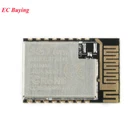
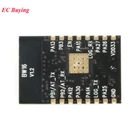
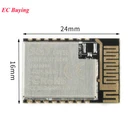
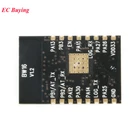
Product introduction: BW16 is a dual-band WiFi+Bluetooth-compatible SoC module developed based on RTL8720DN. BW16 supports dual-band (2.4GHz or 5GHz) WLAN and Bluetooth-compatible Low Energy 5.0; it integrates ARM V8 (Cortex-M4F compatible) high-performance MCU, ARMV8M (Cortex-M0 compatible) low-power MCU, WL AN (802.11a) /b/g/n), MAC, Bluetooth-compatible baseband and RF baseband, and provides a set of configurable GPIO ports for the control of different peripheral devices. BW16 also integrates internal memory, supports simple application development, and can achieve complete Wi-Fi and BT50 protocol functions. It can be used in industrial manufacturing, smart home, smart farm, hotel solutions and other fields. Product parameters: Module model: BW16 Package: SMD-16 Size (mm): 24*16*3(± 0.2)mm Antenna form: onboard PCB antenna or IPEX antenna Spectrum range: 2400-2483.5MHz or 5180-5825MHz Bluetooth-compatible: BT5.0 Bluetooth-compatible frequency range: 2.402GHz-2.480GHz Support interface: UART/GPIO/ADC/PWM/IIC/SPI/SWD Power supply range: power supply voltage 3.0V~3.6V, typical value 3.3V, power supply current> 450mA Working temperature: -20°C~70°C Storage environment: -40°C-125°C, <90%RH Certification: RoHS, FCC, CE, SRRC Pin description: PA13: LP_PWM1/SPI1_MISO PB3: ADC/SWD_CLK CHIP_EN: Chip enable terminal PA15: SPI1_CS PA8: UART_LOG_RXD PA27: SWD_DATA PA26: LP_I2C_ SDA/LP_PWM5 VDD_3V3: 3.3V power supply (VDD); maximum 450mA GND: Ground PA25: LP_I2C_SCL/LP_РWM4 PA7: UART_LOG_TXD PA14: SPI1_CLK PA30: LP_PWM1 PA12: SPII_MOSI/LP_PWMO PB2: LP_UART_RXD PBI: LP_UART_TXD Instructions for use: Antenna layout requirements 1. For the installation position on the motherboard, the following two methods are recommended a. Put the module on the edge of the motherboard, and the antenna area extends out of the edge of the motherboard; b. Put the module on the edge of the motherboard, and hollow out an area at the antenna position on the edge of the motherboard. 2. In order to meet the performance of the onboard antenna, it is forbidden to place high frequency devices or metal parts around the antenna powered by 1. Recommended 3.3V voltage, peak current above 100mA 2. It is recommended to use LD0 for power supply. If DC-DC is used, the ripple is recommended to be controlled within 30mV 3. The DC-DC power supply circuit is recommended to reserve the position of the dynamic response capacitor, which can optimize the output ripple when the load changes greatly 4. It is recommended to add ESD devices to the 3.3V power interface Use of GPIO port 1. There are some GPIO ports on the periphery of the module. If you need to use it, it is recommended to connect a 10-100 ohm resistor in series with the IO port. This can suppress overshoot. Make the levels on both sides more stable. It is helpful for EMI and ESD. 2. For the pull-up and pull-down of special IO ports, please refer to the instructions in the specification. This will affect the startup configuration of the module. 3. The IO port of the module is 3.3V. If the main control and the IO level of the module do not match, a level conversion circuit needs to be added. 4. If the IO port is directly connected to a peripheral interface or a terminal such as a header, it is recommended to reserve an ESD device near the terminal of the IO trace.