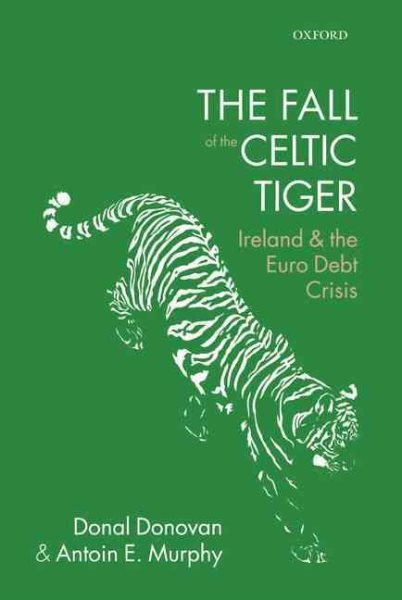
Fall of the Celtic Tiger : Ireland and the Euro Debt Crisis, Paperback by Don...
$ 23.15
Description
Fall of the Celtic Tiger : Ireland and the Euro Debt Crisis, Paperback by Donovan, Donal; Murphy, Antoin E., ISBN 0198719965, ISBN-13 9780198719960, Brand New, Free shipping in the US By 2000, Ireland had achieved a remarkable macroeconomic performance producing 10% economic growth, a budget surplus, and a very low debt to GDP ratio. Emigration had disappeared and there was significant immigration from Eastern Europe. By November 2010, economic growth was significantly
negative, the budget deficit was out of control and the debt to GDP ratio had risen to over 100%. In an unprecedented development, Ireland was forced to apply for an emergency bail-out package from the Troika (European Commission, European Central Bank, and the International Monetary Fund).
This book examines how the Celtic Tiger, a high growth performing economy, fell into a macroeconomic abyss. It is a story that shows how the Irish economy moved from a property market crisis to a banking crisis and fiscal crisis, and how these three crises produced a fourth crisis, the massive
financial crisis of 2010. Against the backdrop of the newly created Eurozone, th demonstrates the way in which a housing boom was transformed into a property market bubble through excessive credit creation. Accompanying the property market bubble buoyant property related taxes enabled a
profligate government to over spend and under tax. Few, both in Ireland or Europe, recognised the danger signals because the prevailing economic ideology suggested that financial markets could self-regulate.
Th analyses the roles of banks, builders, developers, regulators (the EU, the ECB, the Central Bank of Ireland, and the Irish Financial Regulator), economists, the media, and a property driven populace during the various unfolding stages of the downfall of the Celtic Tiger. It pays particular
attention to the decisions to provide a highly controversial comprehensive guarantee for the covered Irish banks and the events that left the government with no alternative but to request a bail out. It considers throughout two questions: who or what was responsible for what happened and in what
sense? Could actions have been taken at various stages to prevent the final recourse to the bail out? Finally, th addresses the future of the Celtic Tiger and discusses the impact of measures to help resolve the current Euro debt crisis as well as the underlying lessons to be learned from
this traumatic period in Ireland's economic and financial history.