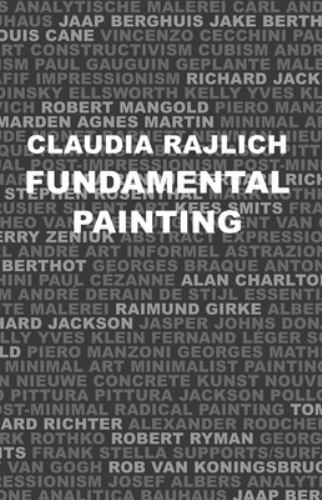
Fundamental Painting : Lessons in Minimalist Painting by Claudia Rajlich (2022, Trade Paperback)

$ 17.48

ISBN-13: 9788074373367 Format: Trade Paperback Topic: History / Contemporary (1945-) Item Width: 6.2 in Number of Pages: 264 Pages Book Title: Fundamental Painting : Lessons in Minimalist Painting Publisher: Kant ISBN-10: 8074373363 Publication Year: 2022 Intended Audience: Trade Item Length: 9 in gtin13: 9788074373367 Item Weight: 18.4 Oz brand: Kant Author: Claudia Rajlich Item Height: 0.7 in Illustrator: Yes Language: English Genre: Art Synopsis: An illustrated account of the origins and legacy of Minimalist painting in the US and Europe through the lens of a landmark Stedelijk exhibition The term "Fundamental Painting" was coined by the Stedelijk Museum as the title of a 1975 exhibition that sought to highlight a new kind of painting emerging on both sides of the Atlantic. The show was built around Robert Ryman, and included 18 artists from Europe and the US, such as Robert Mangold, Brice Marden, Agnes Martin, Gerhard Richter and Stephen Rosenthal. The then director of the Stedelijk, Edy de Wilde, called their work "a reflection on the foundations of painting." Fundamental Painting looks back on the impact of the 1975 show then and now, including an appendix of installation shots. The author, Claudia Rajlich, engages in a detailed description of the featured works and their execution, using this as a jumping-off point to survey 20th-century abstract and nonobjective painting in relation to the development of Minimalist painting., Fundamental Painting (1975): Lessons in Minimalist Painting is the first account of this 1970s current and its role in the history of 20th century painting. The term Fundamental Painting was coined by the Stedelijk Museum Amsterdam as the tide of a 1975 exhibition that sought to highlight a new kind of painting emerging on both sides of the Atlantic. It was built around Robert Ryman and included 18 artists from Europe and the United States. The then museum director of the Stedelijk Edy de Wilde called their artistic scope a reflection on the foundations of painting." In the first part of this book, Rajlich traces how the curators defined this specific current and its public as well as its critical reception. In the second part, she explains in detail the elements of paintings, how they are used in Fundamental Painting, and why. Next, Rajlich surveys the use of these painterly elements across 20th century abstract and non-objective painting in relation to the development of Minimalist painting. The last part of this book examines the effect of Fundamental Painting on its viewer in the context of art across the ages. It argues that Fundamental Painting goes beyond formalist concerns and seeks to engage with the concept of beauty as understood through the philosophy of aesthetics. Book jacket., An illustrated account of the origins and legacy of Minimalist painting in the US and Europe through the lens of a landmark Stedelijk exhibition The term Fundamental Painting was coined by the Stedelijk Museum as the title of a 1975 exhibition that sought to highlight a new kind of painting emerging on both sides of the Atlantic. The show was built around Robert Ryman, and included 18 artists from Europe and the US, such as Robert Mangold, Brice Marden, Agnes Martin, Gerhard Richter and Stephen Rosenthal. The then director of the Stedelijk, Edy de Wilde, called their work a reflection on the foundations of painting. Fundamental Painting looks back on the impact of the 1975 show then and now, including an appendix of installation shots. The author, Claudia Rajlich, engages in a detailed description of the featured works and their execution, using this as a jumping-off point to survey 20th-century abstract and nonobjective painting in relation to the development of Minimalist painting.