
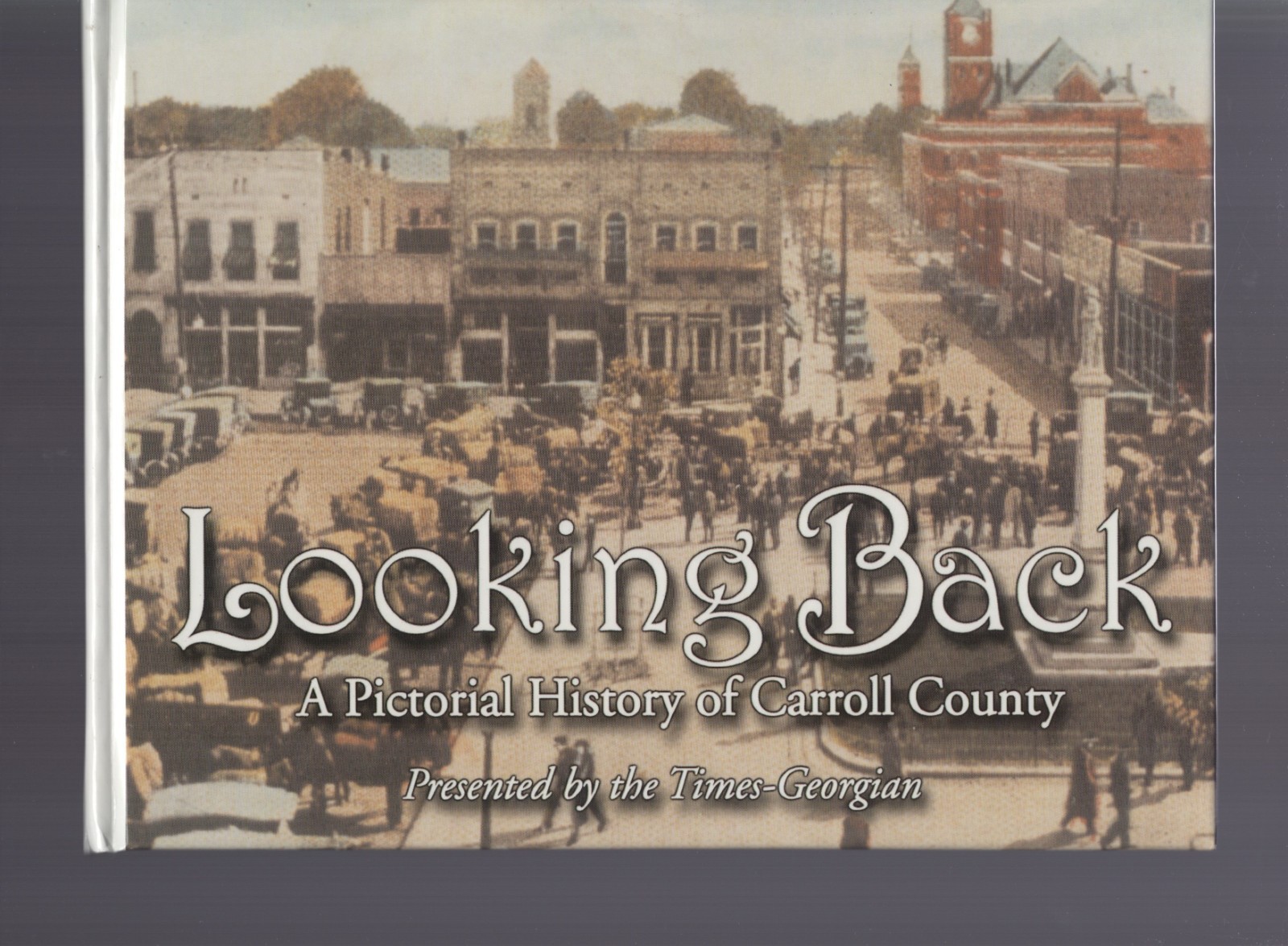


Looking Back - A Pictorial History of Carroll County / Hardcover Times-Georgian
$ 26.4
Description
Looking Back - A Pictorial History of Carroll County / Hardcover Times-Georgian. Pages: not written on, clean, bright, odor free, fine edges. Cover: near fine edges. See Photos! Portraits—formal and candid—anchor the book in personal history. They highlight the diversity of the county’s residents and the central role of family networks in shaping community life. Condition: Like New. BOX packed with padding! Pages: not written on, clean, bright, odor free, fine edges. Cover: near fine edges. See Photos! Ships from California. Ships same or next day (weekdays and Saturdays)! ABOUT: Looking Back: A Pictorial History of Carroll County (2001), presented by the Times‑Georgian, is a locally produced, image‑driven historical volume that traces the evolution of Carroll County, Georgia, through archival photographs, captions, and short contextual essays. It functions less as a continuous narrative and more as a curated visual record of community memory. Scope and Structure The book is organized chronologically and thematically, moving from the county’s early settlement period through the twentieth century. Each section uses photographs—many drawn from private family collections, newspaper archives, and local institutions—to illustrate how the county’s landscape, economy, and social life changed over time. Key Themes 1. Early Settlement and Rural Life Images of farms, mills, early homesteads, and unpaved roads highlight the county’s agricultural foundations. The book emphasizes the self‑sufficiency and isolation of early communities. 2. Growth of Towns and Commerce Carrollton and surrounding towns appear in street scenes, storefronts, and civic buildings. The photographs document the rise of local businesses, banks, theaters, and newspapers, showing how the county shifted from a rural frontier to a more structured commercial center. 3. Industry and Education The book includes images of textile mills, manufacturing plants, and the development of educational institutions such as local schools and what would become the University of West Georgia. These sections underscore the county’s gradual modernization. 4. Community Life and Traditions Church gatherings, parades, fairs, sports teams, and social clubs reveal the rhythms of everyday life. These images capture the county’s cultural identity and the continuity of local traditions across generations. 5. People and Families Portraits—formal and candid—anchor the book in personal history. They highlight the diversity of the county’s residents and the central role of family networks in shaping community life.