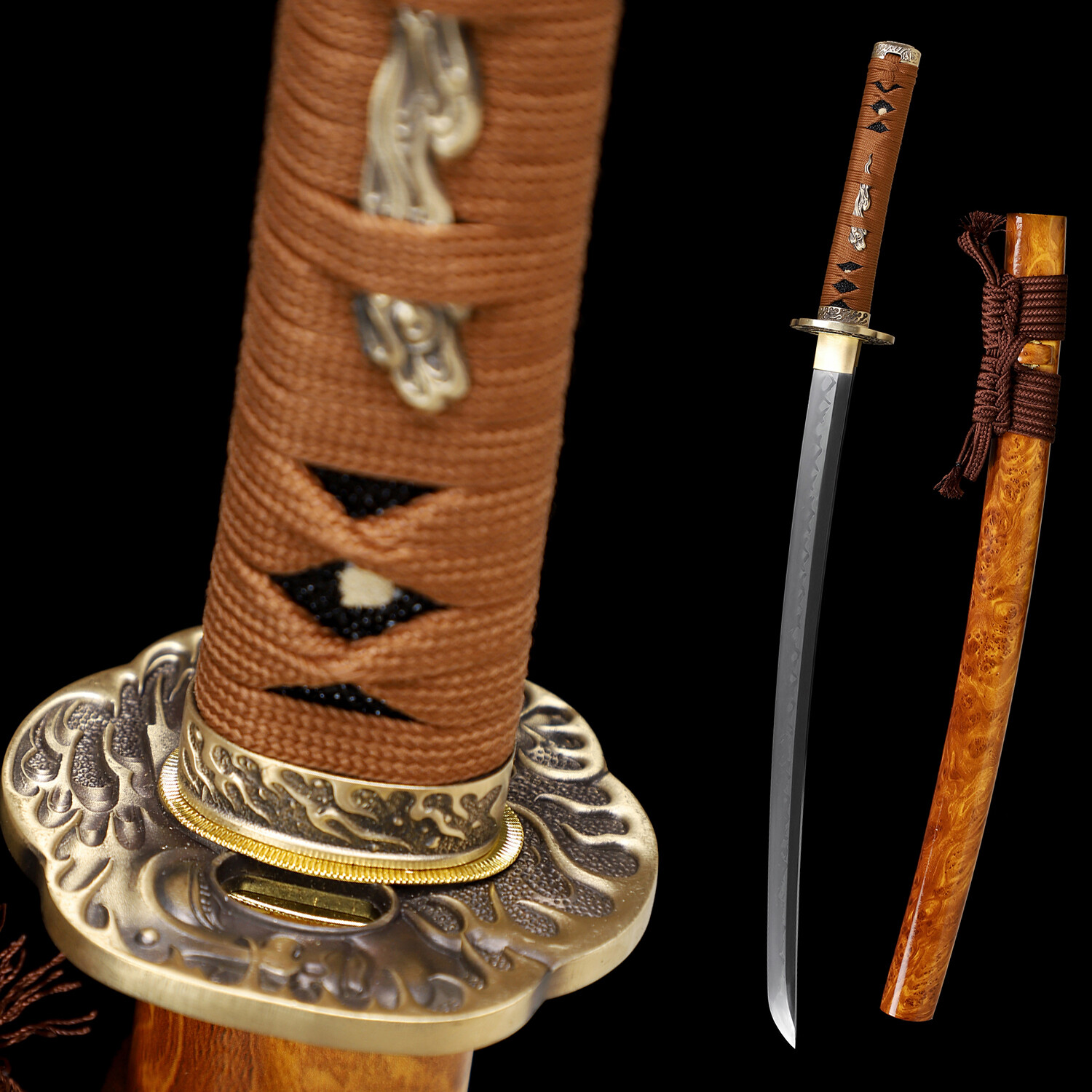
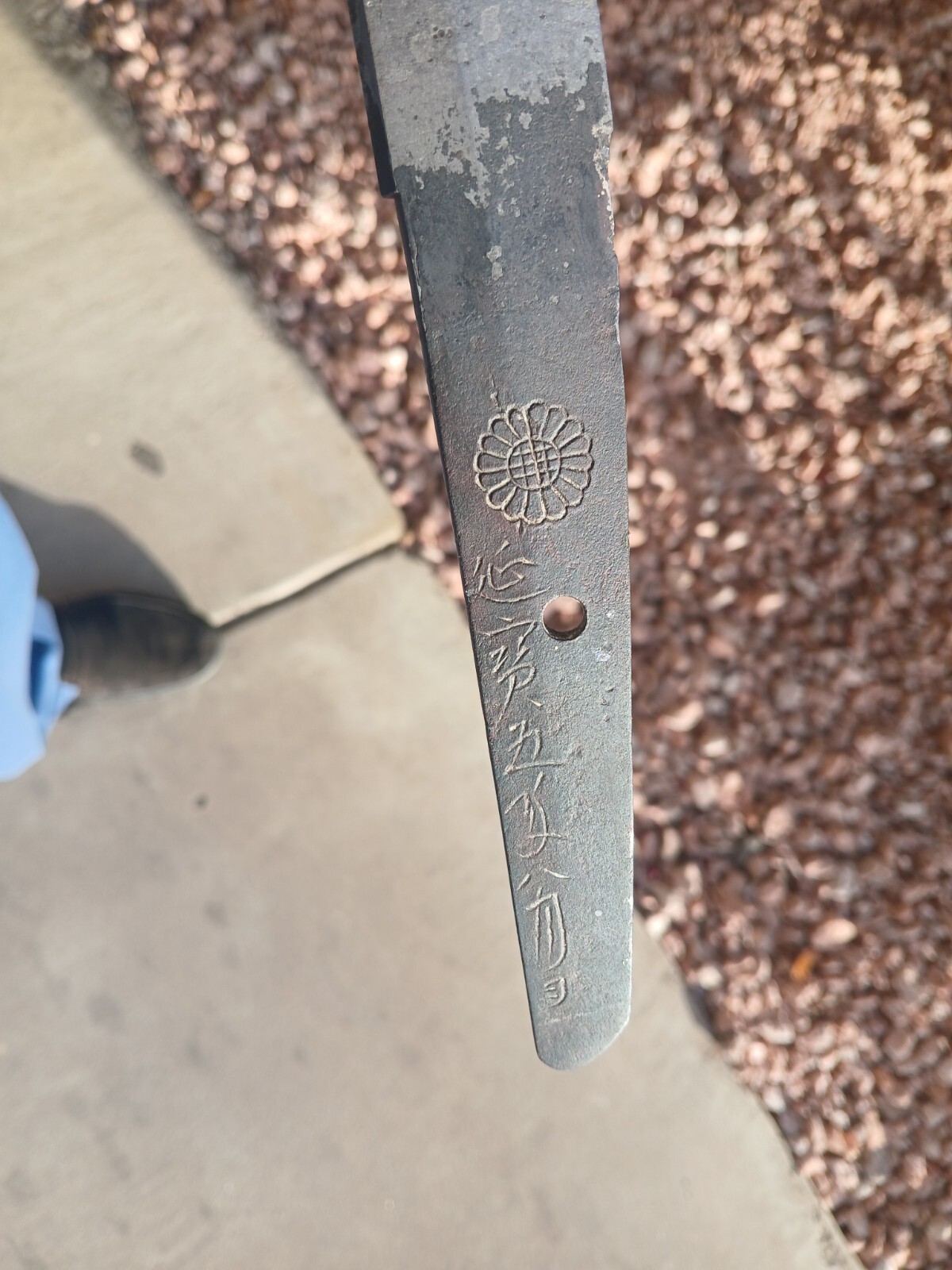
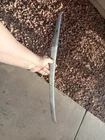
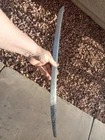
Rare Japanese Sword wakizashi Inoue Shinkai Oct 1677 With Chrysanthemum
$ 792.0
Description
Rare Japanese Sword wakizashi Inoue Shinkai Oct 1677 With Chrysanthemum picked up at an estate sale i collect ww2 stuff and rare photos and documents.. i trade located phx az.. pm me if interested sold as is.. im not a sword guy so i can get more pix but not really any more information A wakizashi dated october 1677 with his engraved 16 petals chrysanthemum. Here is lots of info about him: SHINKAI (真改), Enpō (延宝, 1673-1681), Settsu – “Izumi no Kami Kunisada” (和泉守国貞), “Inoue Izumi no Kami Kunisada” (井上和泉守国貞), “Inoue Shinkai” (井上真改). Inoue Shinkai, his civilian name was Inoue Hachirōbei (井上八郎兵衛), was born in the seventh year of Kan´ei (寛永, 1630) the second son of the 1st generation, i.e. of Oya-Kunisada. He succeeded first as 2nd generation Kunisada and, from Keian onwards (慶安, 1648-1652), made daisaku works for his father. In the first year of Jōō (承応, 1652) he received the honorary title Izumi no Kami and around Manji four (万治, 1661) he was granted permission from the Imperial court to engrave a 16-petal chrysanthemum onto his tangs. Until the fourth year of Kanbun (寛文, 1664) he executed the pistil of the chrysanthemum hatched crosswise. From Kanbun five (1665) onwards he interpreted this area as a circle with a thick dot in its centre but towards the end of Kanbun eleven (1671) returned to the initial form. After the death of his father in Keian five (1652), his salary of 150 koku from the Itō family was transferred to Shinkai. His flamboyant style earned him the nickname Ōsaka-Masamune (小坂正宗) and, besides Sukehiro (助広), he is regarded as the most representative of all Ōsaka-shintō smiths. The name change to Shinkai took place in the eighth month of Kanbun twelve (1672) and it is said that he received his pseudonym from the Neo-Confucian Kumazawa Banzan (熊沢蕃山, 1619-1691). From the eighth month of Kanbun seven (1667) he executed the mei of the ura side of the tang in grass script. Shinkai died – 976 – unexpectedly on the ninth day of the eleventh month of Tenna two (天和, 1682), at the age of 53. There are various theories and transmissions about his death. Most sources say he died of food poisoning, another says he fell completely drunken into a well. His grave is at Ōsaka´s Jūgan-ji (重願寺) Inoue Shinkai made mostly katana and wakizashi in shinogizukuri, tantō are rare and date mostly from his early artistic period when he still signed Kunisada. His katana and wakizashi have a shallow sori and a rather wide mihaba. The jihada is a dense and beautifully forged ko-itame with ji-nie all over the blade. Some works also show chikei. The hamon is mostly based on suguha and shows a compact nioiguchi or is a suguha mixed with chōji or a suguha mixed with shallow notare. But he also applied a gunome-midare, ō-midare or ō-notare in thick nioideki in combination with an Ōsaka-yakidashi. The hamon becomes continually wider in its course from the base to the top. Shinkai was a master of nie and one of the best shintō smiths focussing on a nie-based deki. The bōshi shows mostly a komaru-kaeri. The tang has a ha-agari-kurijiri or an iriyamagata-jiri, and the yasurime are sujikai or sujikai with keshō. saijō-saku