
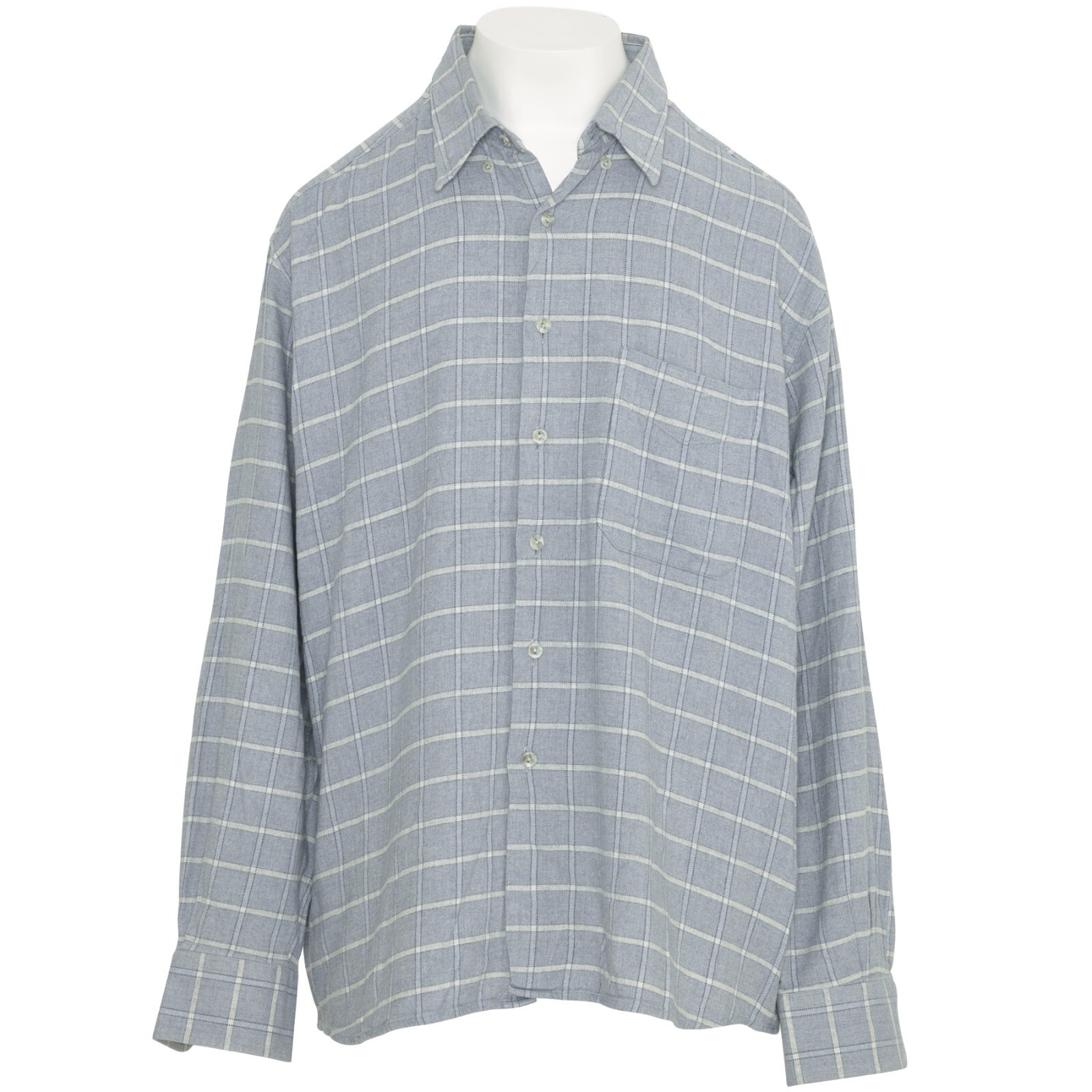


Vintage 1980s Ángel Guimerá Spanish Off-White Flannel Overcheck Shirt
$ 39.6
Description
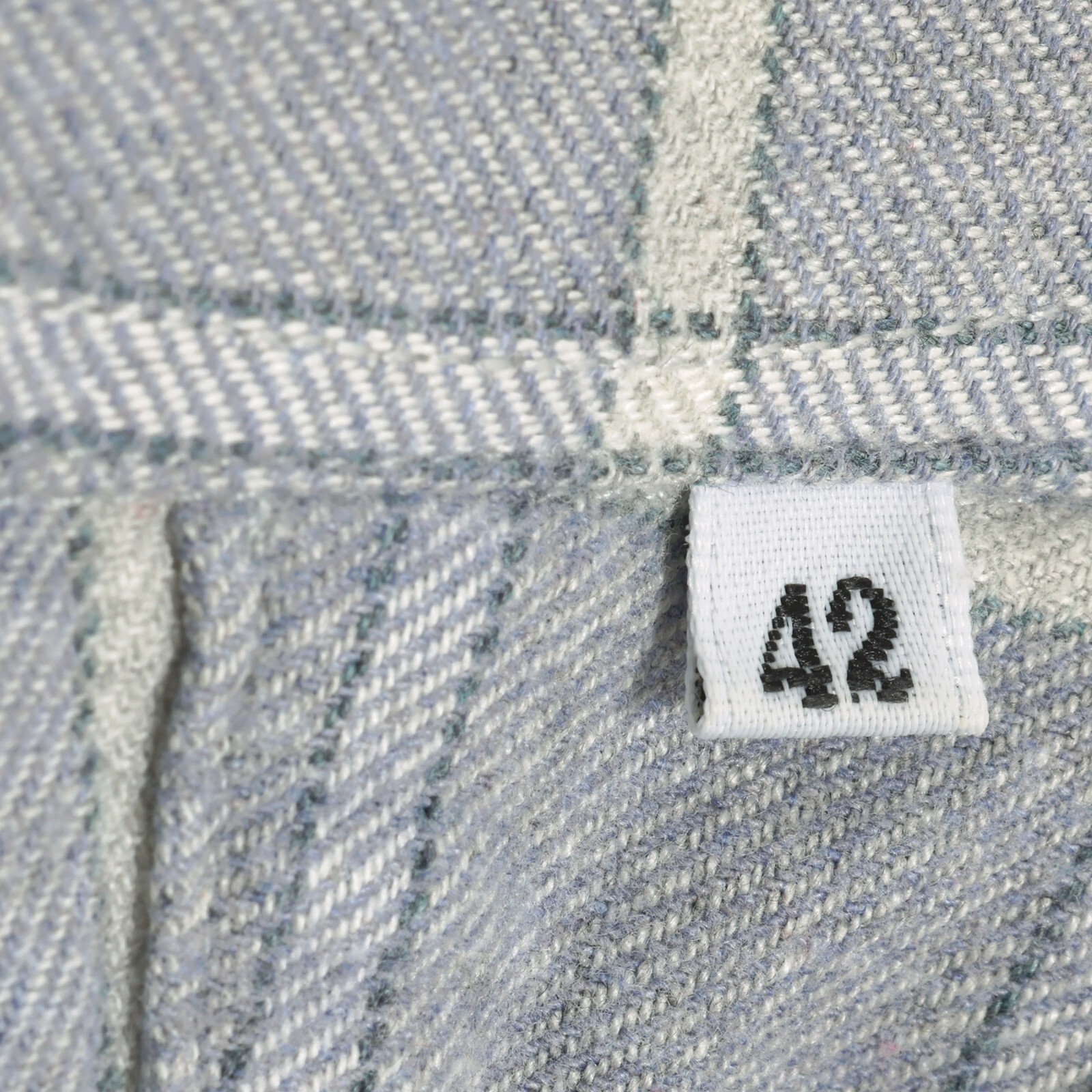
Pasarela por Ángel Guimerá operates within the paradigm of continental menswear, drawing from Mediterranean tailoring traditions while articulating a subtle design philosophy rooted in textile fluency and formal restraint. The brand, likely Spanish in origin—both in nomenclature and sensibility—emerges as a proponent of garments that reconcile elegance with utilitarian purpose, eschewing overt branding in favor of material presence and construction clarity. The name “Pasarela” directly references the runway, indicating aspirations toward elevated menswear, but without the theatricality often associated with avant-garde fashion. Ángel Guimerá, either the founding designer or a namesake, presides over a design ethos favoring textile integrity, structural balance, and contextual adaptability. This specific garment—a men’s long-sleeve checked casual shirt—epitomizes the brand’s commitment to transitional tailoring: a wearable interface between the formal and the relaxed, intended for environments ranging from office-casual settings to understated evening engagements. Technically classified as a men’s casual shirt, the piece is meticulously constructed for temperate seasonal wear, with the deliberate application of yarn-dyed check patterns in a subdued blue-grey palette intersected by fine white overchecks. The design articulates a balanced silhouette through key elements: a full-button placket, pointed collar, single chest patch pocket, set-in long sleeves with buttoned cuffs, and a slightly curved hem. The tailoring suggests a heritage-informed, softly structured garment conceived for refined leisurewear, not unlike the stylistic evolution witnessed in Southern European men’s fashion throughout the late 20th century. In terms of construction methodology, the garment exhibits a high level of technical execution. Side seams are likely constructed using either flat-felled or French seams, contributing to durability while maintaining internal cleanliness. The stitching is executed with a tight SPI (stitches per inch) of approximately 8 to 10, consistently applied throughout via single-needle lockstitching—a hallmark of quality manufacturing. The placket is folded and reinforced with an edge seam, maintaining visual precision and structural longevity. Button attachment follows the four-hole method, sewn with tight shanks and even thread tension, while cuff construction adheres to squared edges, reinforced buttonholes, and consistent topstitching. All seams—particularly at high-stress points such as armholes and shoulders—are balanced, with minimal bulk and well-distributed allowances (approximately 1 cm), indicative of professional tailoring standards. The technical detailing extends to the precision of plaid matching—a visual alignment achieved across the center placket and chest pocket, requiring careful marker planning and stringent quality control. The chest pocket itself features a slightly curved bottom hem, pattern-matched fabric, and a topstitched edge, signaling intentionality at the micro-construction level. While the back yoke is not visible, a single-layer yoke is likely present, consistent with this shirt typology. Seam finishing on the interior includes surged or tape-bound methods, and placket edges are likely enclosed—providing structural refinement without adding bulk. The textile composition advances this precision into the realm of material engineering. The fabric is a twill weave, identified specifically as 2/2 twill, characterized by its diagonal ridging and supple drape. The diagonal grain structure not only adds durability but also improves wrinkle recovery and garment movement. The weave is paired with a probable cotton-polyester fiber blend—estimated at 60–70% cotton and 30–40% polyester—balancing natural breathability with structural stability and ease of care. The yarn is likely ring-spun cotton, evident in the heathered texture of the base yarns, while the overcheck stripes employ more tightly spun yarns for visual clarity. The fabric weight falls within the 150–170 GSM range, placing it in the medium-weight category ideal for layering. A lightly emerized or sueded surface finish softens the hand without tipping into full flannelization, offering tactile comfort while maintaining opacity and visual crispness. The fabric’s origins, both historical and comparative, link it to a lineage of heritage shirtings. Its tactile and structural attributes draw from traditional flannel shirting of the US and UK—twill-weave cottons brushed for softness—while its weight and surface behavior parallel worsted cotton twills favored in Italian cooler-season sportswear. It further echoes the strength and visual logic of British cavalry twill, albeit translated into a casual shirting weight. The check motif itself references windowpane plaids, historically used in Scottish suiting and hunting garments, here reinterpreted with Mediterranean softness and scale modulation. From a textile sourcing perspective, this fabric aligns with the output of several mills known for elevated casual cottons. Brisbane Moss (UK) produces brushed cottons and twills that closely parallel this fabric’s hand and construction. Albiate 1830 (Italy), part of the Albini Group, specializes in heritage-inspired shirtings with similar check and twill combinations. Thomas Mason, typically associated with fine dress shirting, also develops brushed seasonal cottons comparable in weave and finish. Somelos (Portugal), a major supplier of flannels and brushed twills across Europe, rounds out the fabric’s potential provenance, particularly in its application of muted checks and seasonal textures. The structural layout follows a standard three-panel torso—two front panels and one back—with the chest pocket integrated into the plaid layout. Sleeves are two-piece, shaped with gathered ease at the cap, and exhibit a relaxed tapering into squared cuffs. The shoulder features a soft slope, typical of relaxed continental fits, while the overall silhouette maintains a relaxed straight-cut torso with mild oversizing, granting mobility without succumbing to volume. The collar construction—a medium spread with a sewn-in, non-fusible interfacing—offers moderate roll and tactile flexibility, aligning with traditional shirtmaking methods that prioritize shape retention without rigidity. Set-in sleeves feature crisp alignment at the shoulders, with moderate taper through the forearm, and seam allowances are balanced with clean transitions at structural junctions. Edge finishing is executed with professional restraint: the hem adopts a classic shirt-tail curvature, lockstitched at the edge; cuffs and collar are reinforced with tight, symmetrical buttonhole stitching; and the neckline transitions cleanly into the collar stand and front placket, free from puckering or excessive layering. Internal finishing methods—likely surged or tape-bound—reinforce the garment’s underlying construction values without compromising visual or tactile coherence. The garment’s conceptual palette—dusty blues intersected by off-white overchecks—signals emotional neutrality and accessibility. The evenly spaced grid structure of the plaid imparts a sense of order and familiarity, appealing to wearers who prioritize consistency and understated presence. The psychological dimension of the design invites a quiet confidence, apt for social and semi-formal contexts alike. Aesthetically, the piece situates itself within a continuum of Euro-classic menswear, channeling the understated visual codes of brands like Digel, Guy Laroche casualwear, or Jaeger. It reflects the post-1980s move toward proportionally relaxed silhouettes, textile-first design, and tonal understatement—a marked departure from the flamboyance of 1970s discowear or the aggressive architecture of 1980s power dressing. Historically, it occupies the late 1980s to early 1990s window, characterized by Euro-label experimentation with emotional minimalism, Mediterranean tailoring, and the emergence of non-suit elegance for professional men. In contemporary terms, the shirt finds clear alignment with movements such as quiet luxury and normcore, and resonates with present-day aesthetics championed by Lemaire, Officine Générale, Arpenteur, or Uniqlo U. Positioned within the mid-tier European ready-to-wear sector, the piece exhibits strong market viability both as a vintage collectible and as a model for modern reinterpretation. Its engineering—particularly in seam construction and plaid continuity—demonstrates a level of competence that supports resale in curated secondhand markets or upcycling into modern silhouettes. Within the industry, it occupies a valuable niche: bridging the traditions of continental tailoring with the evolving demands of contemporary casualwear—proving its place within the elevated essentials canon. Measurements (cm): Chest: 62 Length: 74 Shoulder: 46 Sleeve: 64 Size Conversion (approximate): US Men’s Size: M–L EU Men’s Size: 48–50
Order completed successfully – tracked and on time
This seller successfully completed an order.
This seller successfully completed an order.
Related products
L.L.Bean Mens Medium Yellow Flannel Utility Work Shirt W50
$ 11.62Goodfellow Men's Large Floral Tropical Palm Tree Button-Up Shirt
$ 9.44Men's Long Sleeve Shirt,Brooks Bros. Size L
$ 9.5Island Shores Shirt Mens Large Washable Silk Floral Hawaiian Tropical Aloha Camp
$ 7.71