



Vintage Book Green Commonwealth Stewart Holbrook 1950 Logging History
$ 9.51
Description
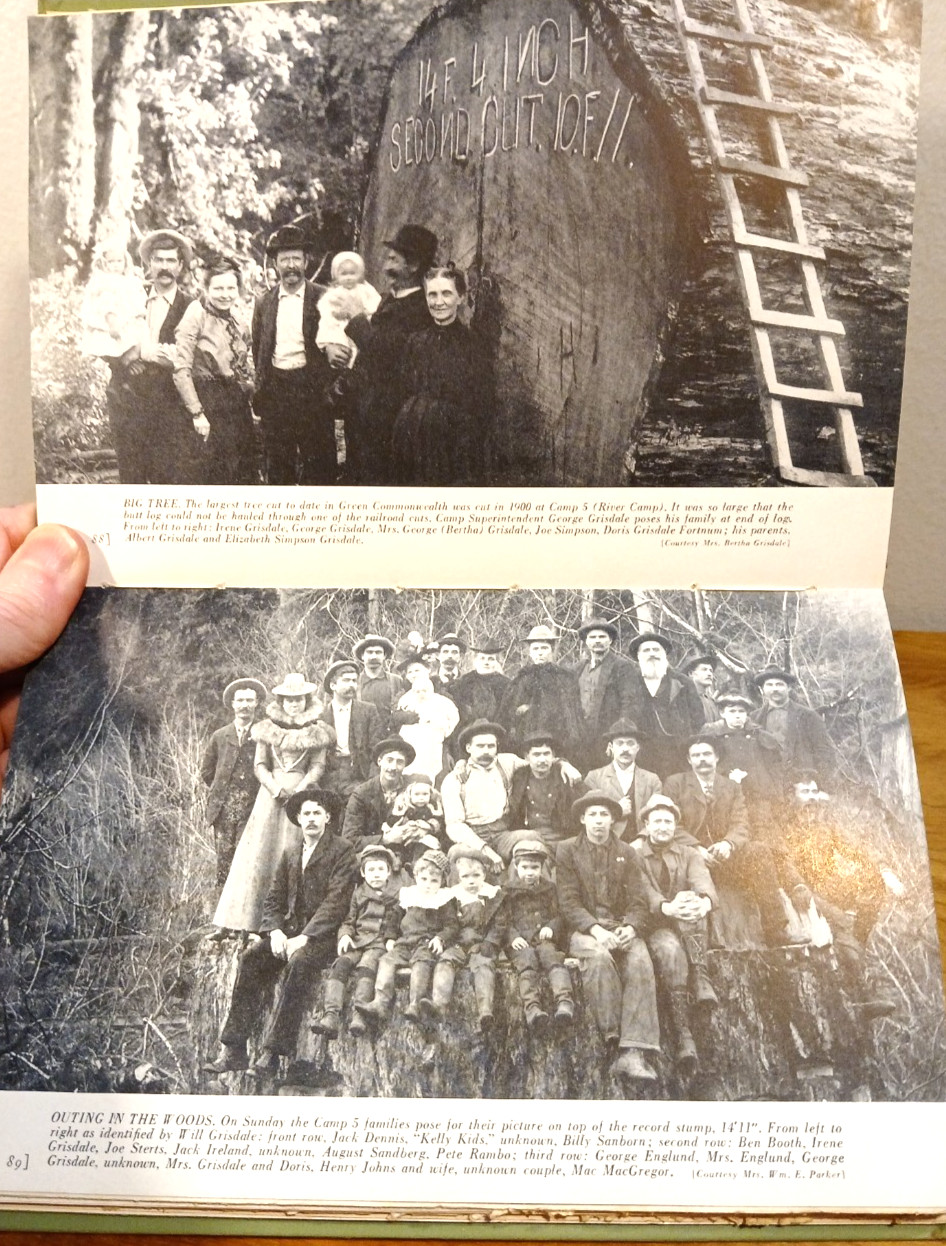
Vintage Book Green Commonwealth Stewart Holbrook 1950 Logging History. He wrote for The Oregonian for over 30 years, was featured in The New Yorker, and authored over three dozen books. Holbrook's career was remarkable when you consider that he moved to Portland in 1923 as an unemployed ex-logger without a high school diploma and ended up teaching at Harvard University. Vintage Book Green Commonwealth Stewart Holbrook 1950 Logging History. The book is in really good condition, especially for its age. The only flaw is that some of the pages have frayed looking edges (see photos). Otherwise, it is in excellent condition with no marks, torn pages, or other damage. A narrative of the past and a look at the future of one forest products community. Author is Stewart Holbrook. Published for their friends by Simpson Logging Company, Shelton, Washington. Illustrated by Phyllis Heady. Printed by Frank McCaffrey at his Dogwood Press, Seattle, Washington. Copyright 1945 by Simpson Logging Company. Second Edition 1950. The book has a map of the Lower Olympic Peninsula in Washington on the inside front cover and inside back cover. The maps are drawn by Albert O. Petzold. The book has 66 full-page photographs. The photographs are of things like a portrait of David Shelton, the Pioneer Willey Mill, the Satsop Railroad, the W.H. Kneeland Mill, the SS Willie, New Kamilche, Orman Huntley's bull team, Sol Simpson's horses, Camp 4 of the Satsop Railroad, a Camp Barn, Simpson's first Dolbeer, Mark Draham's first Dolbeer, the crew of Camp 4, Camp 5 of Simpson Logging Company, Camp 6 of Bordeaux Brothers, Art & Humor at Matlock, office of the Simpson Logging Company at Matlock, Cookhouse on the Bingham, two Tintype Swells from Shelton, members of the train crews on The Blakely, Engine No. 1, The Tollie, Leaders of the Simpson Logging Company: Sol Simpson A.H. Anderson Mark Reed, outstanding pioneers of Mason County and Grays Harbor County, Stalwarts, Grant C. Angle, Camp 5 families, the Shelton Band, The Lemuel Graytroux home, McCleary loggers, The Walking Dudley, Billy Sargison's Orchestra, the Shelton Baseball team, World's Fair Toothpick, The Lumbermen's Mercantile Company, the Pierce Arrow, the SS S.G. Simpson, The Bear Saloon, Shelton Industrial Area, Plywood and Door Plant, The Award of the Army-Navy "E", Grisdale, Klamath California, Shelton Public Library, Irene S. Reed High School, Shelton General Hospital, Shelton City Hall, Kneeland Park, Railroad Avenue, South Olympic Tree Farm, and much more. Photos by Mrs. Hypatia Haupt, B.C. Willey, Mrs. Florence Groshong, Bill Somers, Grant C. Angle, Mrs. Wm. E. Parker, W.J. Countryman, Mrs. Bertha Grisdale, James Draham, Mrs. H.A. Winsor, Mrs. A.E. Hillier, Mrs. A.V. Govey, Ed Elliott, Mrs. A.S. King, Geo. Andrews, Bill Sargison, George Townsend, Miss Katheryn Wilson, Phil Fredson, Joe Thomas, Dave Adams, Bill Forbes, Dave James, Al Lyford, Stan Spiegle, Chet Ullin, and K.S. Brown. 8.75" tall and 6" wide. Stewart Hall Holbrook was an American logger, writer, journalist and popular historian born on August 22, 1893, in Newport, Vermont. His writings focused on what he called the "Far Corner": Washington, Oregon, and Idaho. His topics included Ethan Allen, the railroads, the timber industry, the Wobblies, and eccentrics of the Pacific Northwest. An early proponent of conservationism, he believed that Oregon's growing population would damage the state's environment. Holbrook was a logger before he moved to Portland, Oregon in 1923, when he was 30 years old, and became an accomplished writer. He wrote for The Oregonian for over 30 years, was featured in The New Yorker, and authored over three dozen books. Holbrook also produced a number of satirical paintings under the pseudonym of "Mr. Otis" in a style he called "primitive modern". These paintings are still shown at the Portland Art Museum or can be found at the University of Washington Libraries Special Collections. In the early 1960s, he was the founder and leading spokesperson of an early fictitious conservation movement called the James G. Blaine Society. The Stewart H. Holbrook Literary Legacy Award is named for Holbrook and is presented every year to a "person or organization in recognition of significant contributions that have enriched Oregon's literary community". Holbrook's career was remarkable when you consider that he moved to Portland in 1923 as an unemployed ex-logger without a high school diploma and ended up teaching at Harvard University. Holbrook received a Caldecott Medal in 1950, a Horn Book Fanfare Best Book award in 1950, a Pacific Northwest Literary Association Young Readers Choice Award in 1962 and had New York Times Bestseller books twice in 1957 and in 1953. Holbrook published in many publications including Giant Mystery Reader, The American Mercury, and American Heritage. Books by Holbrook include "Davy Crockett", "Let Them Live", "Tall Timber", "Murder Out Yonder", "The Portland Story", "America's Ethan Allen", "Saga of the Saw Files", "The Age of the Moguls", "Down on the Farm", "The Rocky Mountain Revolution", "Dreamers of the American Dream", "The Golden Age of Quackery", "The Wonderful West", "Promised Land", "Murder at Harvard", "Shanghai Nights in Oregon", "The Lady & The Lumberjack", "The Story of America's Railroads", "Belle of Indiana", "America in the Good Old Days", "The Swamp Fox of the Revolution", and many more. Stewart Holbrook died on September 3, 1964, in Portland, Oregon.


